

Plumbing Notes: The Repo Rebound
pressures in $ funding markets are lingering

After an unexpectedly large rate plunge hit the o/n (overnight) rate complex, a swifter-than-expected reversal has followed. The Fed’s reserve injections (RMOs), combined with numerous inflows to the ultra-short-end, had prompted a brief period of excess cash, forcing some trades to print below the Fed’s target band. Excess GSE cash1, net negative t-bill issuance2, and “war inflows” from money funds forced repo rates lower, while a simultaneous deluge in the interbank market caused the overnight Fed Funds rate (o/n FF) to join in the descent. With o/n FF printing in a straight line for more than two years, SOFR-FF basis traders have been conditioned to expect moves solely in SOFR, not in o/n FF. But now, with wild swings in FHLBs’ (Federal Home Loan Banks’) cash balances — the main “rate setter” in the unsecured interbank realm — o/n FF has begun to move, and more often.
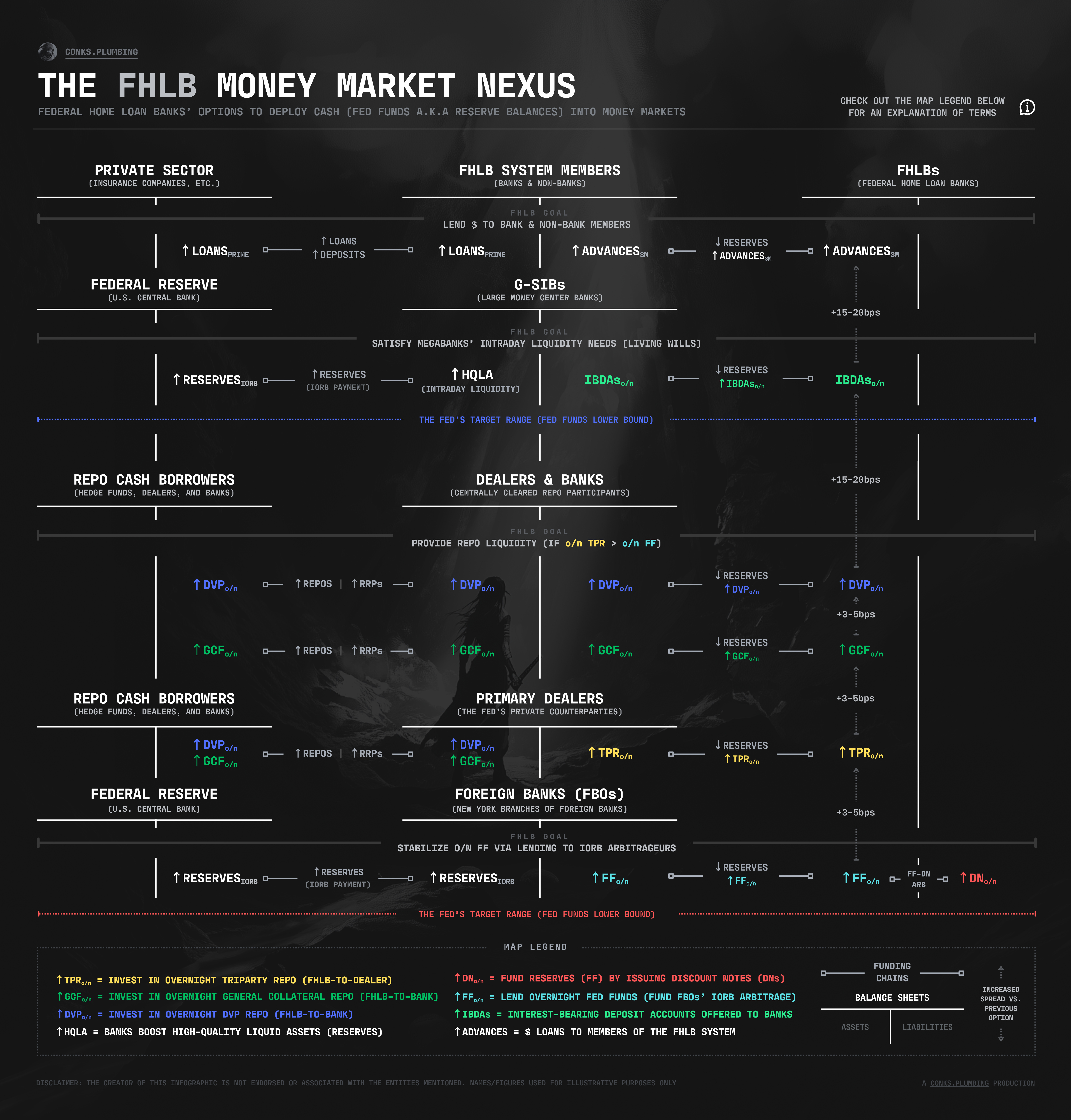
As FHLBs have found it almost impossible to park cash elsewhere, the odds of interbank rate volatility have skyrocketed. After meeting demand for $ loans from members (i.e. advances), FHLBs deploy most of their cash into the Fed Funds market to feed hungry foreign banks (FBOs), eager for reserves to fund their arbitrage trades, borrowing from FHLBs at o/n FF and parking the cash at the Fed to earn IORB (interest on reserve balances), making a spread.
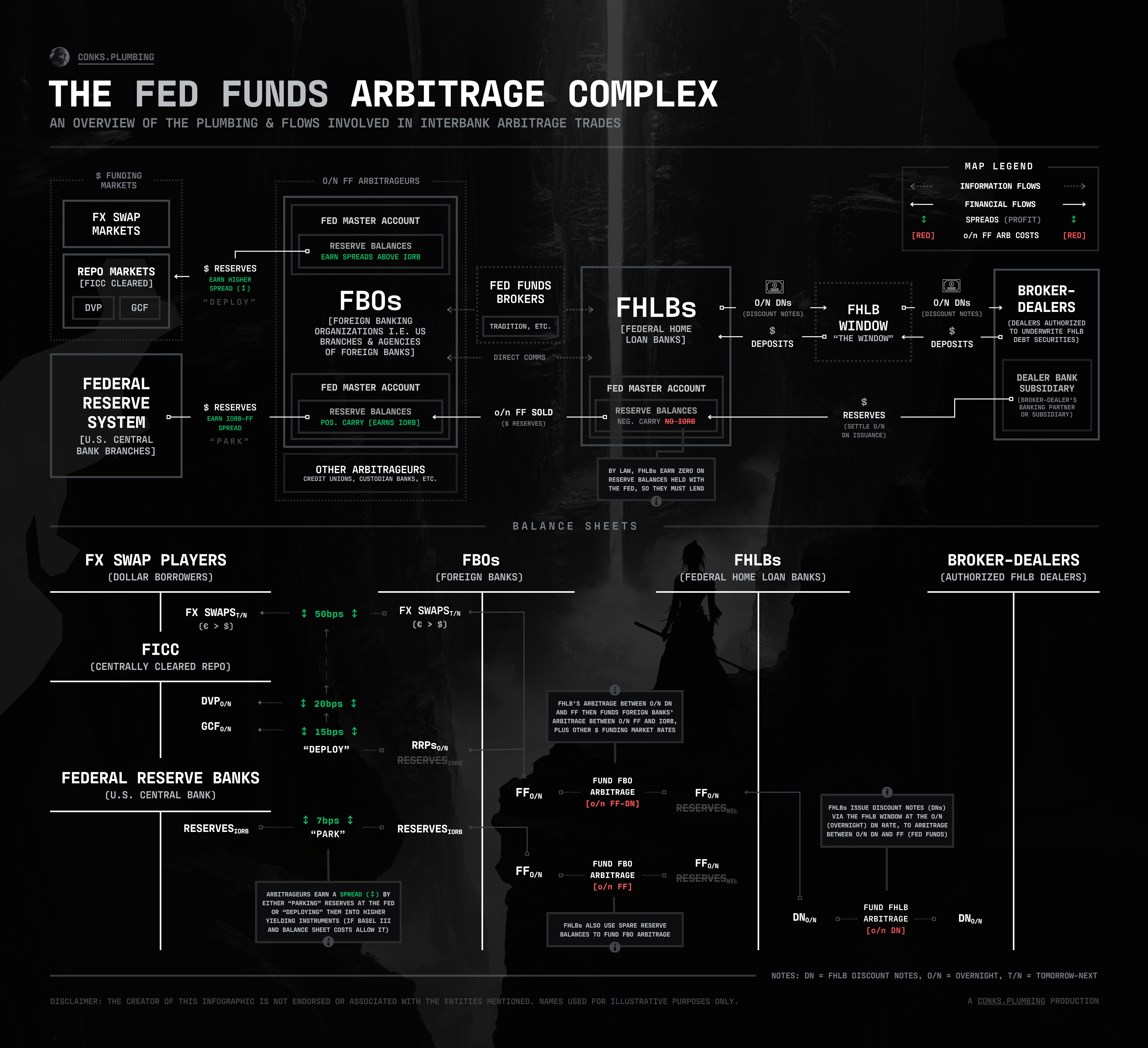
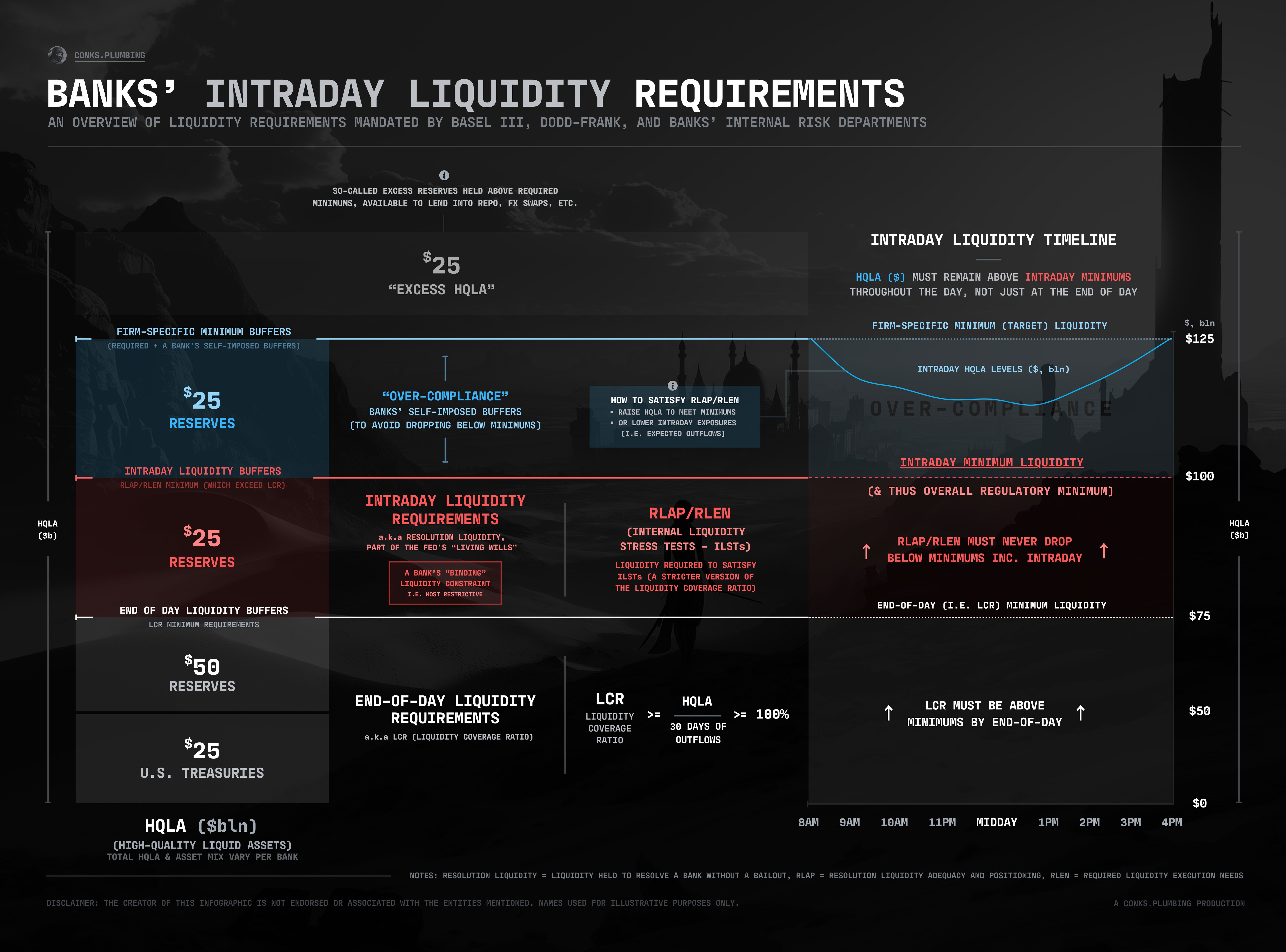
FHLB traders3 do have numerous alternatives. In the warped era of Basel III, secured rates (SOFR) have mostly traded above unsecured rates (o/n FF)4. To capture this spread, FHLB desks have switched opportunistically from lending in o/n FF (unsecured interbank markets5) to deploying reserves in o/n repo6 (secured interbank markets7), aiming for both higher yields and early cash return, a dealbreaker for FHLBs needing to hold an early-morning liquidity buffer to satisfy their regulators. FHLBs also lend their reserve balances to large banks via “interest-bearing deposit accounts”, or IBDAs for short, forming the de facto intraday market for megabank liquidity that allows G-SIBs (Global Systemically Important Banks) — the largest of the large! — to meet intraday liquidity needs8.
But by mid-May, even with FHLBs having multiple options for deploying cash into money markets, the perfect storm had emerged.